
Rule34 Explained: Watch Online in Free HD
Rule34 is one of the internet's most recognizable and misunderstood cultural phenomena. What started as a humorous observation about online creativity has evolved into a widely searched term associated with adult fan art, anime communities, digital archives, and internet memes.
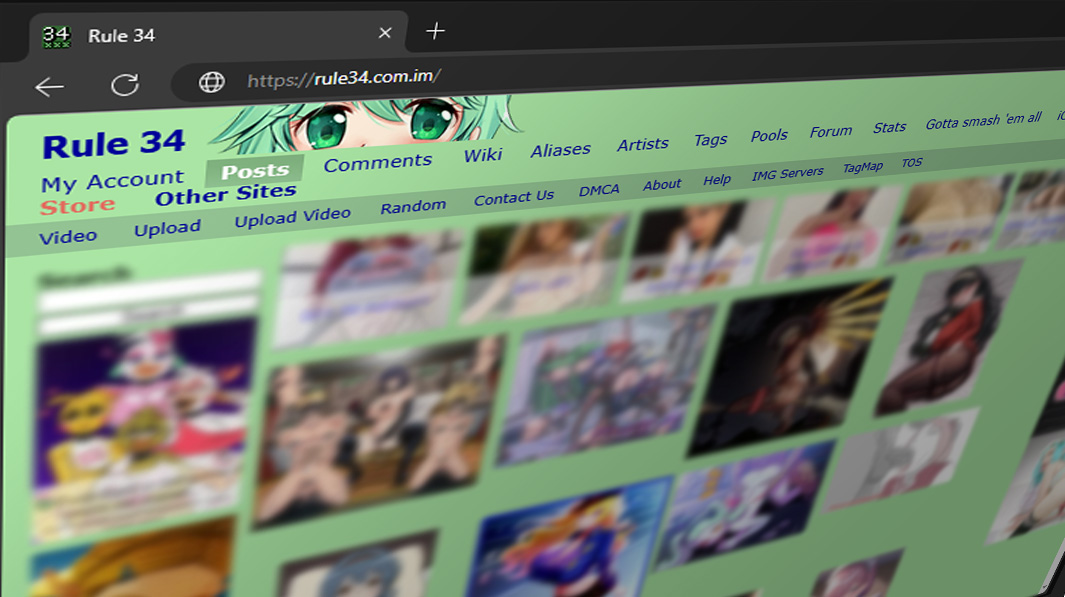
But there's more to Rule34 than a provocative catchphrase. Its history reveals how online communities create traditions, how fictional characters inspire unexpected reinterpretations, and why understanding internet culture matters when navigating today's digital world.
Whether you've encountered the term on social media or wondered what Rule34 websites actually do, this guide explains its origins, technology, cultural influence, and browsing considerations.
What Is Rule34? The Meaning Behind the Internet Meme
Rule34 is an unofficial internet saying suggesting that adult-themed content can be created about virtually any recognizable subject. It began as a humorous exaggeration, not an actual rule, and later became associated with websites that archive user-generated adult artwork.
The expression is frequently written as Rule 34, R34, or Rule34. These variations generally refer to the same cultural concept, although search results may lead to different websites or communities.
As an internet meme, Rule34 represents an exaggerated observation about online creativity. Within fan-art culture, it describes adult reinterpretations of fictional characters and entertainment franchises. The expression has also been adopted by independently operated websites that organize searchable artwork collections.
Why Is It Called Rule 34?
The number comes from a humorous collection known as the Rules of the Internet. These were informal observations, inside jokes, and exaggerated descriptions of online behavior rather than official regulations.
Rule 34 became one of the most recognizable entries because it captured a recurring feature of internet culture: almost anything popular can inspire unexpected interpretations. There is no governing organization enforcing the rule, and its numbering has no particular technical significance.
The History of Rule34: Where Did It Come From?
The commonly cited history of Rule34 stretches back to the early 2000s, when webcomics, message boards, and online fan communities were developing their own language.
One widely credited milestone is a 2003 webcomic by Peter Morley-Souter, also known online as TangoStari. His comic helped popularize the expression after he encountered an unexpected adult parody involving familiar cartoon characters.
However, earlier online references suggest that similar observations may have circulated before the comic. Consequently, 2003 is better understood as a major documented milestone than an unquestionably established starting point.
How Rule34 Spread Across the Internet
During the early 2000s, online forums and fan communities exchanged humorous observations about unusual internet content. Morley-Souter's 2003 webcomic gave the expression a memorable visual reference, helping it spread among internet users.
By the mid-2000s, the phrase appeared in online dictionaries and circulated alongside collections of the Rules of the Internet. Anonymous imageboards and meme communities encouraged wider recognition.
From approximately 2007 onward, dedicated image archives strengthened the connection between Rule34 and searchable collections of adult-oriented fan art. During the 2010s and 2020s, social media and anime fandoms expanded its cultural visibility.
"An internet meme becomes culturally significant when people recognize its meaning without needing to know its original creator."
— Dr. Eleanor Hayes, fictional digital-culture researcher; illustrative commentary.
What Is the Connection Between Rule34 and 4chan?
Rule34 became closely associated with 4chan because the anonymous imageboard played an influential role in spreading early internet memes. Users shared versions of the Rules of the Internet, helping popularize expressions that later spread beyond anonymous message boards.
However, 4chan did not create or officially own Rule34, and the expression is not exclusive to that platform. Its cultural identity developed across a broader collection of websites and communities.
Why Is Rule34 Mentioned on Twitter or X?
On X, Reddit, and other social platforms, Rule34 often appears as an inside joke or a reference intended to spark curiosity. Someone might mention Rule34 beneath a new video-game character announcement without sharing any adult material.
In such cases, the expression functions as cultural shorthand rather than a direct reference to a particular website. Its meaning depends on the surrounding conversation.
How Rule34 Became Connected to Anime, Manga, and Fan Art
Anime and manga have extensive fan communities in which people create illustrations, alternative character designs, fictional scenarios, and interpretations of existing stories.
Rule34 became associated with parts of these communities because character-centered artwork is easy to categorize, share, and search. Distinctive anime designs also make fictional personalities instantly recognizable across different artistic styles.
Why Is Rule34 Associated With Anime?
Anime fandom encourages creative participation through illustrations, cosplay, writing, animation, and digital design. Popular franchises can inspire substantial collections of unofficial artwork produced by creators with different interests and approaches.
Digital illustration communities make sharing these works relatively easy. Artists can publish drawings and associate them with characters, fictional universes, and descriptive tags.
However, anime fan art is not automatically Rule34 content. Ordinary portraits, landscapes, character studies, and humorous illustrations exist independently of adult-oriented communities.
The Difference Between Fan Art and Official Artwork
Official artwork is produced or authorized by the original rights holder. Fan art is generally created independently by enthusiasts who appreciate an existing character, story, or fictional universe.
A fan illustration may use recognizable characters without becoming part of the original story. This distinction matters when evaluating authenticity, attribution, creator permissions, and whether an image represents its source material accurately.
Rule34 Sites vs. Booru Imageboards: What's Different?
One common source of confusion is the relationship between Rule34 websites and booru imageboards.
A booru is an image archive built around searchable tags. Instead of organizing everything into traditional folders, it associates pictures with descriptive information such as artists, characters, fictional universes, and visual characteristics.
Rule34-related archives often use similar systems, but booru technology is not inherently adult-oriented. The same approach can organize general artwork, photography, or other visual collections.
Comparing Rule34 and Other Art Platforms
| Platform or Category | Main Purpose | Content Characteristics | Search Organization |
|---|---|---|---|
| Rule34-related archives | Adult-oriented fan-art collections | Explicit material may be prominent | Character and descriptive tags |
| Danbooru | Anime illustration indexing | Mixed ratings, including mature material | Detailed categorized tags |
| Safebooru | Anime-focused image archive | Primarily safe-for-work artwork | Searchable tags and ratings |
| DeviantArt | Broad creative-art community | General and mature-rated artwork | Keywords and browsing settings |
| Pixiv | Illustration, manga, and creative works | All-ages and age-restricted categories | Tags and creator pages |
The key difference is content policy, not simply search technology. A sophisticated tagging system can improve discovery, but it does not guarantee that artwork is accurately labeled, appropriately moderated, or safe to download.
Which Booru Platforms Have Better Tag Systems?
Danbooru is particularly associated with detailed tag categorization, including artist, character, copyright, general, and metadata tags. Its structure helps users discover relationships between fictional franchises, creators, and visual subjects.
Safebooru supports multi-tag queries, exclusions, and rating filters. However, search precision and content safety remain separate qualities, so platform policies and browsing settings still matter.
How Does Rule34 Online Search Work?
Most tag-based image archives follow a relatively simple structure. An uploaded image receives descriptive labels, and the search system matches user queries against those labels to display relevant results.
Understanding the Role of Tags
Character tags identify fictional personalities, while series tags associate artwork with its original franchise. Artist tags help credit creators, and general tags describe illustration styles, visual subjects, or technical characteristics.
Rating tags classify content according to a platform's rules, while metadata tags can describe image formats and resolution. Together, these systems make extensive archives easier to navigate.
However, community-maintained tagging is not always accurate. Missing attribution, inconsistent naming conventions, and incorrect classifications can affect search results.
How to Evaluate a Rule34-Related Website Safely
Before interacting with an unfamiliar image archive, examine its website address. Misleading domain names, unexpected spelling changes, and redirects to unrelated pages deserve caution.
Understanding the site's content category is equally important. Rule34-related archives generally contain adult-oriented material, and visitors should check age requirements and content settings before proceeding.
Privacy policies, reporting tools, and account requirements can reveal useful information about a platform's operation. Avoid installing unfamiliar applications or browser extensions promoted through unexpected pop-ups.
Is Rule34 Safe? Understanding the Real Risks
There is no universal yes-or-no answer to whether Rule34 is safe. The name itself is not malware, but websites using it can differ significantly in content, security, advertising, privacy practices, and moderation. Each platform should be evaluated individually.
Content Safety and Age Restrictions
Rule34-associated platforms are generally intended for adults because their content may include explicit sexual material. Age restrictions and enforcement methods vary between websites and jurisdictions.
Content warnings and rating filters may reduce accidental exposure, but incorrect classifications and third-party advertising can still produce unexpected browsing experiences.
Malware, Pop-Ups, and Misleading Downloads
Visiting an adult-oriented website does not automatically infect a device. However, deceptive advertisements, malicious redirects, fraudulent download buttons, and unverified applications can create security risks.
Suspicious pages may claim that a device is infected, request installation of unknown software, or redirect visitors to unrelated domains. The safest response is to avoid suspicious prompts and rely on trusted browser and operating-system security protections.
"A website's content category tells you what you might encounter. Its security practices determine how much you should trust its technology."
— Dr. Eleanor Hayes, fictional digital-culture researcher; illustrative commentary.
Privacy and Tracking
Websites may collect IP addresses, browser information, cookies, and activity data. Third-party advertisements can introduce additional tracking through external services.
Private browsing reduces some locally stored history but does not make someone anonymous to websites, internet providers, or network administrators.
Copyright and Creator Rights
User-generated archives may contain artwork uploaded without the creator's permission. Public availability does not necessarily mean an illustration can be freely redistributed, modified, or used commercially.
Is Rule34 Safe on Mobile Phones?
Mobile browsers can display many of the same websites available on desktop computers, but smaller screens, intrusive advertisements, and accidental taps can make unfamiliar platforms more difficult to navigate.
Is There an Official Rule34 Mobile App?
Rule34 originated as an internet expression rather than a centralized software platform. Therefore, there is no single official application representing the entire concept.
Individual websites may provide mobile-friendly pages or independent applications. A program advertised as a "Rule34 app" should not automatically be assumed trustworthy or affiliated with a particular archive.
How Can You Browse More Safely on Mobile?
Keeping Android, iOS, and mobile browsers updated helps protect against known security vulnerabilities. Built-in protections against deceptive websites can identify some suspicious pages before they load.
Unknown APK packages, unexpected installation profiles, unnecessary notification requests, and unfamiliar application publishers require additional caution.
Is Rule34 Free, and Does It Require Registration?
The expression Rule34 is free to discuss, but individual websites determine their own access conditions.
Some archives allow free public browsing without an account. Others may require registration for features such as commenting, saving favorites, uploading artwork, or adjusting personalized settings.
A free-to-view website may still include advertising, tracking, or optional paid services. Visitors should understand the platform's current terms and privacy practices before creating an account.
What Are the Best Safer Rule34 Alternatives?
People researching Rule34 are not always looking for adult content. Some simply want anime illustrations, manga-inspired artwork, character designs, or searchable fan-art collections.
Safebooru: Tag-Based Anime Art
Safebooru focuses on anime-style illustrations and searchable tags. Its content policies emphasize safe-for-work uploads, although image classifications can occasionally be incorrect.
It can be useful for people primarily interested in anime illustrations and organized character artwork without deliberately seeking adult-oriented galleries.
DeviantArt: A Broader Creative Community
DeviantArt offers digital paintings, photography, illustrations, fan art, and original character designs. Its browsing settings allow users to adjust exposure to sensitive material.
The platform emphasizes artist profiles and community-oriented discovery, making it suitable for people interested in exploring different styles and creators.
Pixiv: Anime and Manga Illustration
Pixiv is a creative platform particularly associated with Japanese illustration, manga, and anime fandoms. It separates general-audience material from age-restricted categories and provides related viewing settings.
Its creator-centered environment is useful for discovering illustration styles and following artists whose work matches particular interests.
Why Rule34 Still Matters in Internet Culture
Rule34 has remained recognizable because it reflects how digital communities develop shared language, creative traditions, and unexpected interpretations of popular media.
The Power of Participatory Culture
Modern internet culture is not shaped exclusively by studios, publishers, or traditional media companies. Ordinary users create memes, artwork, jokes, and commentary that can develop into recognizable communities.
Rule34 illustrates how an unofficial expression can become widely known through repeated social participation and reinterpretation.
The Relationship Between Fandom and Identity
Fans frequently express their connection to fictional universes through independent artwork. Some reinterpretations remain close to the original material, while others depart significantly from established narratives.
Rule34 represents an adult-oriented corner of this larger creative landscape, not the entirety of fan culture.
Search Engines and Changing Language
The expression demonstrates how internet language evolves. A phrase originating within a small community can eventually become a search term, social-media reference, and name adopted by unrelated services.
Someone searching for rule34 meaning may be researching internet history, while rule34 sites suggests interest in a particular archive. Searches for rule34 alternatives may reflect concerns about browsing safety or interest in different fan-art platforms.
Common Misconceptions About Rule34
Despite its popularity, Rule34 remains surrounded by misunderstandings about its origins, cultural meaning, technology, and associated websites.
Is Rule34 an Official Internet Rule?
No. Rule34 is an internet meme rather than a formally established rule or technical standard. Its association with the Rules of the Internet reflects an informal collection of jokes and observations.
Do All Rule34 Websites Have the Same Owner?
No. Different services can adopt similar names without sharing ownership or affiliation. Their moderation policies, technical systems, and account requirements may differ considerably.
Did Rule34 Originate on an Adult Website?
The expression's history predates the widespread popularity of dedicated Rule34 archives. Its early development is associated with webcomics, message boards, and online meme communities.
Are Rule34 and Booru the Same Thing?
No. Rule34 describes an internet meme and associated adult-oriented content category. Booru refers to a tag-based image archive format that can organize many kinds of visual material.
Does All Anime Fan Art Belong to Rule34?
No. Anime fan art includes ordinary portraits, landscapes, character designs, and many other creative formats. Rule34 refers only to a specific adult-oriented category.
Conclusion: Understanding Rule34 Beyond the Meme
Rule34 began as a memorable internet expression and evolved into a recognizable part of online culture. Its influence extends across memes, fan-art communities, anime archives, and the vocabulary people use to describe digital creativity.
Understanding its history clarifies why Rule34 is not a single official website, why booru imageboards are a separate concept, and why browsing safety depends on the particular platform involved.
For readers interested in artwork rather than adult material, general-purpose creative communities and filtered anime archives offer useful alternatives. Ultimately, the best way to approach Rule34 is with informed curiosity, respect for creators, and an awareness of online privacy and content safety.
Frequently Asked Questions About Rule34
What Does Rule34 Mean on the Internet?
Rule34 is an unofficial internet meme suggesting that virtually any subject can inspire adult-themed content. It became popular through early webcomics, forums, and online communities, eventually lending its name to independent fan-art archives.
When Was Rule34 Created?
A widely cited milestone dates to a 2003 webcomic by Peter Morley-Souter. However, similar expressions may have circulated earlier, so its precise origin remains uncertain. The phrase gained broader recognition during the mid-2000s.
What Is the Official Rule34 Website?
There is no universally official website for the Rule34 internet meme. Several independently operated archives use related names, including Rule34.xxx and the historically significant Paheal archive. Their ownership, rules, and features should be evaluated separately.
Does Rule34 Have Viruses?
Rule34 is a term, not software, so it cannot contain a virus by itself. Individual websites may nevertheless expose visitors to deceptive advertisements, unsafe downloads, or malicious redirects. Updated browsers and cautious downloading reduce these risks.
Is Rule34 Free to Use Without Registration?
Some Rule34-related websites permit free public viewing, while account requirements depend on the individual service. Registration may be necessary for certain features, such as commenting or saving favorites. Always check a site's current access policies.
What Are the Safest Rule34 Alternatives for Anime Fan Art?
Safebooru, DeviantArt, and Pixiv offer ways to browse anime or character artwork without specifically seeking adult-oriented archives. Content policies and filtering tools differ, so use appropriate browsing settings and remember that classifications can be imperfect.
Is Rule34 a Mobile App or an Internet Rule?
Rule34 originally refers to an unofficial internet saying, not a particular application. Some independent websites offer mobile access, but an app using the name is not automatically official, trustworthy, or affiliated with other Rule34-related services.